

When to Use Shrink Wrapping vs Shrink Bundling
Boost Efficiency and Shelf Appeal for your brands
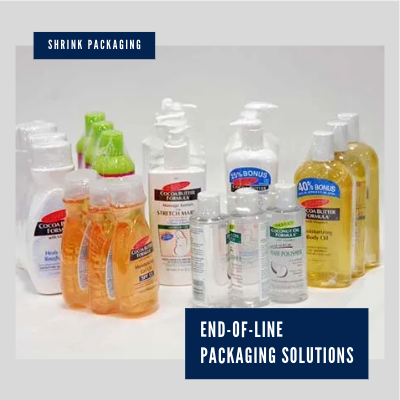
Wrap or bundle?
What Packaging Decision Makers Must Know
Choosing the right end-of-line packaging method makes a big difference in how products move through supply chains and reach customers. Two closely related technologies, shrink wrapping and shrink bundling, are common solutions for grouping products. Although both rely on heat-shrink film, they serve distinct purposes on the pack line and have different impacts on cost, speed, output, and brand presentation.
Below, we break down what each method does, how they differ, and key points to consider when you are evaluating packaging systems for food, beverage, pharma, and nutraceutical products.
What Is Shrink Wrapping?
Shrink wrapping is a process where a plastic film is formed around a product or group of products and then heated so it tightens and hugs the items closely. The film is usually made from materials like polyethylene or polyolefin that shrink when exposed to heat. The product plus film passes through a heat tunnel or heat source that pulls the film tight around every surface.
Typical uses:
Wrapping single units (e.g., boxed food items, pharma cartons).
Creating multipacks (e.g., six-packs of bottles or cans).
Retail presentation packaging where visibility and shelf appeal matter.
Benefits for decision makers:
Product protection: Film creates a barrier against dust, moisture, and dirt — reducing damage and spoilage risks.
Tamper evidence: A sealed shrink wrap shows obvious signs if opened. Useful for regulated goods like medicines.
Shelf ready: Clear film and neat presentation help retail display products directly without secondary cartons.
Compact packages: Tight film reduces bulk, saving warehouse and transport space.
Considerations:
Requires heat tunnels and sealing equipment, which means upfront equipment and energy costs.
Film choice and machine settings must be right for fragile or heat-sensitive goods like some nutraceuticals.
What Is Shrink Bundling?
Shrink bundling takes shrink wrap technology and applies it to group multiple packaged products into one unit. In shrink bundling, products are first collated into a pack or group, then wrapped in shrink film, and heated so it contracts around the bundle, holding everything firmly together.
This method is often used for logistics and distribution, where bundles are later split for retail stocking.
Common shrink bundling use cases:
Multipack bundles (e.g., packs of bottles, trays of food pouches).
Bundles of trays or boxes for distribution to stores.
Collating high-volume products for pallet readiness.
Key advantages:
Efficient handling: Produces compact, unified packs that are easier to move, stack, and ship.
Cost savings: Uses less material and is less expensive than rigid corrugated solutions.
Flexible equipment: Bundling systems can be semi-automatic or fully automated to match your throughput needs.
Simple secondary pack: Ideal for items where individual packaging already protects the product.
Side-by-Side: How They Compare
Shrink Wrapping
Shrink Bundling
- Encases item(s) tightly for protection and presentation
- Single SKU or multipack retail packaging
- Heat sealer + heat tunnel
- Shelf ready and customer-facing products
- Moderate (heat cycle required)
- May be higher per item
- Groups packaged items into a single pack for handling/distribution
- Multipack grouping for warehouse & transport
- Bundler + heat tunnel
- Back-of-house distribution and logistics
- Often faster for groups
- Lower per unit when grouped
Shrink Wrapping or Bundling: Which to choose
Choose shrink wrapping if:
You need retail-ready packaging that looks clean and neat on shelves.
Products must be tamper-evident or need extra protection post-primary pack.
You’re packaging individual units or smaller multipacks for customer purchase.
Choose shrink bundling if:
Your priority is distribution efficiency, especially in high-volume e-commerce, grocery, or warehouse environments.
You’re grouping multiple primary packaged items for pallets or regional distribution.
Your secondary packaging should be low cost and easy to automate.
Industry Applications at a Glance
Food & beverage: Shrink wrapping gives neat bundles for retail (cans, bottles). Shrink bundling makes case packs for storage and transport.
Pharma & nutraceuticals: Tamper evidence and shield from contamination are key — shrink wrapping adds value here. Bundling helps group multi-unit pharma cartons or supplement packs.
- High-speed lines: Both methods integrate with automatic infeeds, tunnels, and conveyors to keep pace with modern lines.
Choosing between Shrink Wrapping or Bundling
Both shrink wrapping and shrink bundling are low-risk secondary packaging solutions that can reduce handling costs, improve logistics, and protect products. Your choice comes down to whether the package must be retail-ready and consumer facing, or optimized for handling and transport.
When designing your packaging line, consider:
Product fragility and regulatory needs (pharma/nutraceutical).
Distribution model (direct to store vs central warehouse).
Throughput and automation goals.
Material costs & sustainability goals.
A well-matched system can boost efficiency, cut waste, and support brand standards across food, beverage, pharmaceuticals, and beyond.
Our team is here to guide you. From integration to service, parts and consumables – we make sure your solution performs at every level!