
How to Choose the Right Automatic Bottle Capping Machine in Canada
Cap Types, Costs & What to Ask Before You Buy
If you’ve recently searched for an automatic bottle capper, a spindle capping machine, or how to cap bottles faster in your production line, you’re not alone. These are among the most common packaging equipment questions we see from Canadian food, beverage, personal care, and chemical manufacturers in 2025 and 2026. The answers, however, are rarely one-size-fits-all.
This guide brings together two critical pieces of the puzzle: understanding what type of cap you’re working with, and knowing how to evaluate a capping machine purchase the right way. Whether you’re scaling up your line, replacing an aging capper, or automating for the first time, here’s what you need to know.
First: Know Your Cap
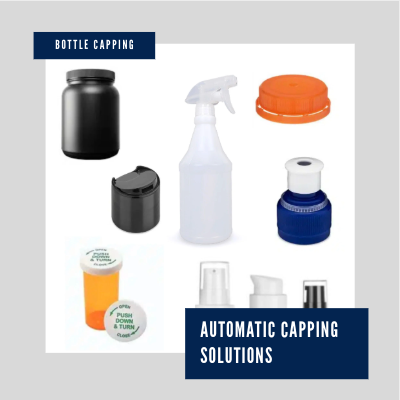
One of the most common mistakes buyers make is shopping for a capping machine before fully understanding their closure. The type of cap you use determines everything — which machine you need, what features matter, and what problems to plan for. Here’s a practical breakdown of the most common cap types and the capping solutions that handle them best.
FLAT CAPS
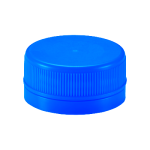
The workhorses of the packaging world, flat caps are used on everything from bottled water and juice to condiments and cleaning products. Most flat caps — where the width exceeds the height — can be automatically applied using a standard spindle capper like the SureKap SK6000-BF6. The one exception: caps larger than 70mm in diameter are prone to cross-threading. For those, SureKap’s SK6000X-BF6 includes a unique cap alignment system that corrects misalignment before it becomes a problem.
TAMPER EVIDENT CAPS
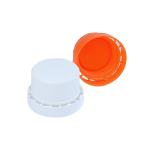
Common in food, beverage, and pharmaceutical products, tamper-evident (TE) caps have a breakable band that signals if a product has been opened. Application is similar to flat caps, but requires careful attention — if spindle discs contact the TE band rather than the cap itself, the band can tear. Proper machine setup matters here, and SureKap’s SK6000-BF6 and SK6000X-BF6 handle the vast majority of TE closures reliably when set up correctly.
CHILD-RESISTANT CAPS
Required for prescription medications, household chemicals, and certain supplements, these caps require a push-down-and-turn mechanism that prevents accidental opening by children. SureKap cappers apply these using a device that presses down on the cap top while the spindles simultaneously tighten — enabling fully automatic application without manual intervention.
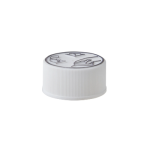
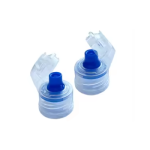
SPORTS CAPS, FLIP-TOPS & YORER CAPS
These specialty closures — push-pull sports caps on water bottles, hinged flip-top caps on condiment or cosmetic bottles, and tapered yorker caps on adhesives or condiments — share a common challenge: their shape and size make automatic feeding tricky. All three typically require a vibratory bowl for proper sorting and alignment, making the SureKap SK6000-SP the right machine for these applications. In some cases where a flip-top cap’s diameter equals or exceeds its height, the BF6 can also work.
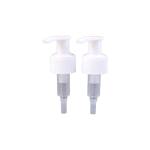
PUMP DISPENSERS & TRIGGER SPRAYERS
These are among the most challenging closures to automate because of the dip tube that extends from the base of the pump into the bottle. SureKap’s VersaKap capping machine was purpose-built to handle both pump dispensers and trigger sprayers automatically, with consistent accuracy and a reasonable return on investment. If you already have an existing capper in place, the SK600 cap tightener is a practical add-on for tightening pumps once they’ve been hand-placed.
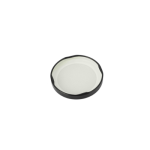
LUG CAPS
Also known as twist-off caps, lug caps are standard on glass jars for products like pickles, jams, and pasta sauces. Unlike threaded caps, they grip the container via angled metal tabs — which means over-torquing can damage the lugs and ruin the seal. For lug-capping applications, SureKap recommends pairing a SK6000-BF6 with a KC-15 digital torque monitor for active torque control during application.
Now: How to Evaluate the Machine (And the Partner)
Once you know what cap you’re working with, the next question is how to evaluate your capping machine options without making an expensive mistake. In 2026, the most common search questions aren’t just “what is a spindle capper” — they’re “how do I avoid downtime after installing new equipment” and “what does a capping machine really cost over time?” Here are the five considerations that matter most.
- Total Cost of Ownership, Not Just Purchase Price
The sticker price is only the beginning. The true cost of any automatic capping machine plays out over years of operation — not at the moment of installation. Training, commissioning, routine maintenance, spare parts availability, and the cost of unplanned downtime all factor into what the machine really costs your business. A lower upfront price can carry significantly higher long-term risk if service access is limited or if future upgrades require major rework. Evaluating total cost of ownership (TCO) from the start helps ensure your investment makes sense against your actual production volumes and growth plans.
- Compatibility With Your Existing Line
A capper doesn’t exist in isolation — it needs to work smoothly with your fillers upstream and your labelers or inspection equipment downstream. Beyond physical footprint, you need to think about control architecture integration, variations in container size, and how changeovers between SKUs will work in practice. Good suppliers will want to work through these details with you before you commit to anything. The goal is to surface integration issues early, so your startup is faster and line disruptions are minimized once you’re running.
- Flexibility for What Comes Next
Few production lines stay static. New SKUs, seasonal products, and evolving packaging formats are the norm, not the exception. Look for machines with adjustable tooling, quick changeover capability, and flexible torque control — features that let a single capping platform support multiple products without requiring a new machine every time your lineup changes. The goal isn’t customization for its own sake; it’s scalability that protects your investment as your business grows.
- Training & Ongoing Support
Introducing automated equipment requires genuine knowledge transfer, not just installation. Your operators and maintenance staff need to be able to run, adjust, and troubleshoot the machine confidently. Look for clear documentation, standardized procedures, and structured training programs as part of any purchase. Equally important is what happens after startup — responsive technical support during the first weeks of production can make the difference between a smooth ramp-up and costly downtime. For Canadian manufacturers, having a local distributor who can answer questions quickly and dispatch support without border delays is a practical advantage that’s easy to underestimate.
- Reliability & Proactive Maintenance Planning
In any production environment, reliability isn’t optional. A capping machine needs to perform consistently shift after shift, maintaining closure integrity and product quality throughout. Before you buy, get clear answers on uptime expectations, serviceability, spare parts lead times, and the supplier’s track record for supporting machines over their full lifecycle. Unplanned downtime doesn’t just cost output — it disrupts labour scheduling and puts customer commitments at risk. A proactive maintenance plan, combined with a strong service network, is what separates a machine that performs for years from one that becomes a problem.
A Note for Canadian Manufacturers
As the exclusive Canadian distributor for SureKap, MD Packaging brings these precision-engineered American-made capping machines to manufacturers across Canada — with local support, faster response times, and an understanding of Canadian production environments. Whether you’re in food and beverage, personal care, chemicals, or co-manufacturing, we can help you match the right machine to your cap, your line, and your growth plans.
No matter what cap you’re running — flat, tamper-evident, child-resistant, pump, trigger, lug, or specialty closures — there’s a SureKap solution built for it. And we’re here to make sure you get the right one, installed right, and supported for the long haul.
Our team is here to guide you. From integration to service, parts and consumables – we make sure your solution performs at every level!